
What stock contributors should create for June-July 2026.
A practical stock photography, video, and vector illustration plan for upcoming holidays, World Cup demand, summer color trends, and metadata choices that can improve exposure.
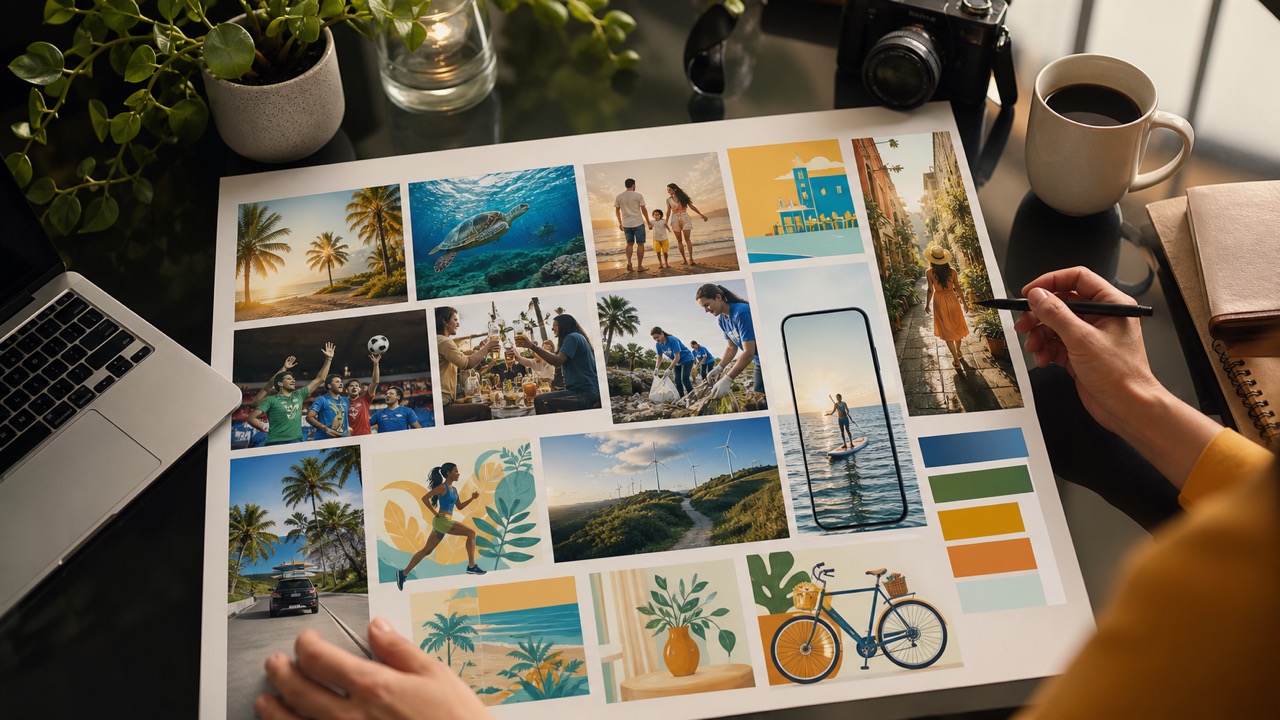
What is changing now
The next two months are unusually useful for stock contributors because several demand signals overlap: global sports attention, environmental observances, U.S. cultural holidays, summer travel, family content, and a broader creative shift toward imagery that feels human, local, tactile, and emotionally specific.
For contributors, the opportunity is not to upload generic summer images. The stronger move is to build small, searchable batches around concrete buyer use cases: community sports viewing, accessible travel, local food and neighborhood culture, father figures, ocean protection, environmental action, and summer wellness. These topics can work across photos, short video clips, and vector illustration packs.
Upcoming seasonal demand in the next two months
June 2026 has several obvious content hooks. World Environment Day falls on June 5, World Oceans Day is June 8, the FIFA World Cup 2026 starts on June 11, Juneteenth is June 19, and Father's Day in the U.S. is June 21. July brings Canada Day on July 1, U.S. Independence Day on July 4, continued summer travel demand, and the World Cup final on July 19.
The useful stock angle is timing. Buyers often search before an event peaks, so late-May and early-June production should focus on assets that can be used immediately by marketers, publishers, small businesses, schools, travel brands, nonprofits, and social media teams.
Opportunities for photos
For photography, prioritize believable scenes with clear commercial use. World Cup-adjacent content does not need protected logos or match footage. Safer ideas include friends watching soccer at home, neighborhood watch parties, kids practicing on a public field, local restaurants preparing game-night specials, travel fans in airports, and diverse families wearing generic team colors.
For environmental and ocean content, avoid generic greenwashing. More useful photos show specific action: beach cleanup volunteers, refill bottles, reusable packaging, public transit to summer events, local food markets, home energy saving, community gardens, and coastal recreation with visible conservation context.
For Father's Day and men's lifestyle content, the blue-ocean angle is modern fatherhood rather than old stereotypes. Shoot single fathers, grandfathers, guardians, co-parenting, fathers cooking, school pickup, caregiving, fitness, medical checkups, and intergenerational hobbies.
Opportunities for video
Video should communicate action quickly. Short clips that work well for buyers include pouring drinks for a soccer watch party, hands tying cleats, fans entering a cafe, a cleanup bag filling with plastic waste, a parent teaching a child to ride a bike, a road-trip packing sequence, and summer wellness routines.
Shoot vertical and horizontal variants when possible. Add clean thumbnails because the app and marketplaces often make buyers decide from a small preview. Describe motion in metadata: cheering, packing, recycling, coaching, walking, cooking, training, celebrating, cleaning, traveling.
Opportunities for vector illustrations
Vector contributors should think in sets, not isolated icons. Strong packs for this period include soccer watch-party icons, summer travel checklists, ocean conservation infographics, Juneteenth education elements, Father's Day greeting templates, accessibility-friendly travel icons, and simple local-business promotion graphics.
The blue-ocean opportunity is regional specificity. A generic sun icon is crowded; a small set for local summer markets, community soccer nights, coastal cleanup posters, or accessible beach facilities is more useful to buyers.
Trending colors and styles to test
Adobe's 2026 creative trends point toward sensory, emotional, playful, connected, and local imagery. For stock contributors, that means tactile closeups, real social connection, visible local culture, and playful but controlled surreal ideas can feel more current than sterile corporate scenes.
Color direction should support the topic. For summer and environmental content, test rich ocean blues, green accents, warm yellow, fruit-inspired orange, and natural earth tones. For sports and community content, use bold local color blocking without team trademarks. For vector work, build editable palettes rather than one fixed look.
Oversupplied or risky styles to avoid
Avoid generic AI-looking families, fake business teams, empty tropical beaches with no use case, plastic-looking sustainability symbols, random soccer balls on white backgrounds, and keyword-stuffed concept images that do not show the concept. Buyers need images that solve a campaign problem, not images that merely mention a trend.
Be careful with trademarks, uniforms, flags used misleadingly, athlete likenesses, venue imagery, and editorial-versus-commercial rules. For World Cup-related demand, generic soccer culture is safer for commercial stock than event-branded imagery.
Metadata and keywording advice for better exposure
Write titles that start with the visible subject and buyer use case. For example, "Friends watching a soccer match at home during summer" is stronger than "World Cup excitement" if no official World Cup element is visible.
Put the strongest searchable nouns first: soccer fans, watch party, summer travel, beach cleanup, father and child, ocean conservation, local food market, vector icon set, vertical video, community event. Then add supporting terms such as sustainability, teamwork, family, celebration, accessibility, wellness, tourism, and social media campaign only when they are accurate.
For videos, include action and format terms. For vectors, include set, icon, infographic, editable, poster, template, and illustration when true. For photos, include real place, demographic, activity, season, and commercial context.
Practical production checklist
Build one small batch per theme instead of one random mixed upload. For each batch, create a hero image, detail shots, horizontal and vertical crops, a short clip if possible, and a vector or template version when the idea supports it.
Before uploading, remove misleading keywords, check release needs, avoid protected marks, and make sure the first 10 keywords describe what is actually visible. Better exposure starts with relevance: the asset has to match both the search query and the buyer's intended use.
Sources
- https://blog.adobe.com/en/publish/2026/01/08/how-creators-leveraging-adobe-2026-creative-trends
- https://stock.adobe.com/in/collections
- https://www.fifa.com/en/tournaments/mens/worldcup/canadamexicousa2026/articles/match-schedule-fixtures-results-teams-stadiums
- https://www.timeanddate.com/holidays/us/juneteenth
- https://www.timeanddate.com/holidays/us/fathers-day
- https://unworldoceansday.org/
- https://www.unep.org/news-and-stories/press-release/republic-azerbaijan-host-world-environment-day-2026
- https://submit.shutterstock.com/help/en/articles/10594604-how-much-will-i-be-paid-as-a-contributor-to-shutterstock
Turn the research into better stock metadata.
Use Fotometa lightly in the workflow: draft titles, descriptions, and keyword sets, then review them against what is visible, what buyers search for, and what each platform allows.